

;)
From bucket list to board member: How Jessica Oyarbide built a global network by engaging with SEWF


Engaging with SEWF means different things to different people. For some, it opens doors to collaborations and networks that would have taken years to build independently. For others, it provides the knowledge, visibility and credibility needed to elevate their work and their region within the global social enterprise movement. For many, it does all of these things at once.
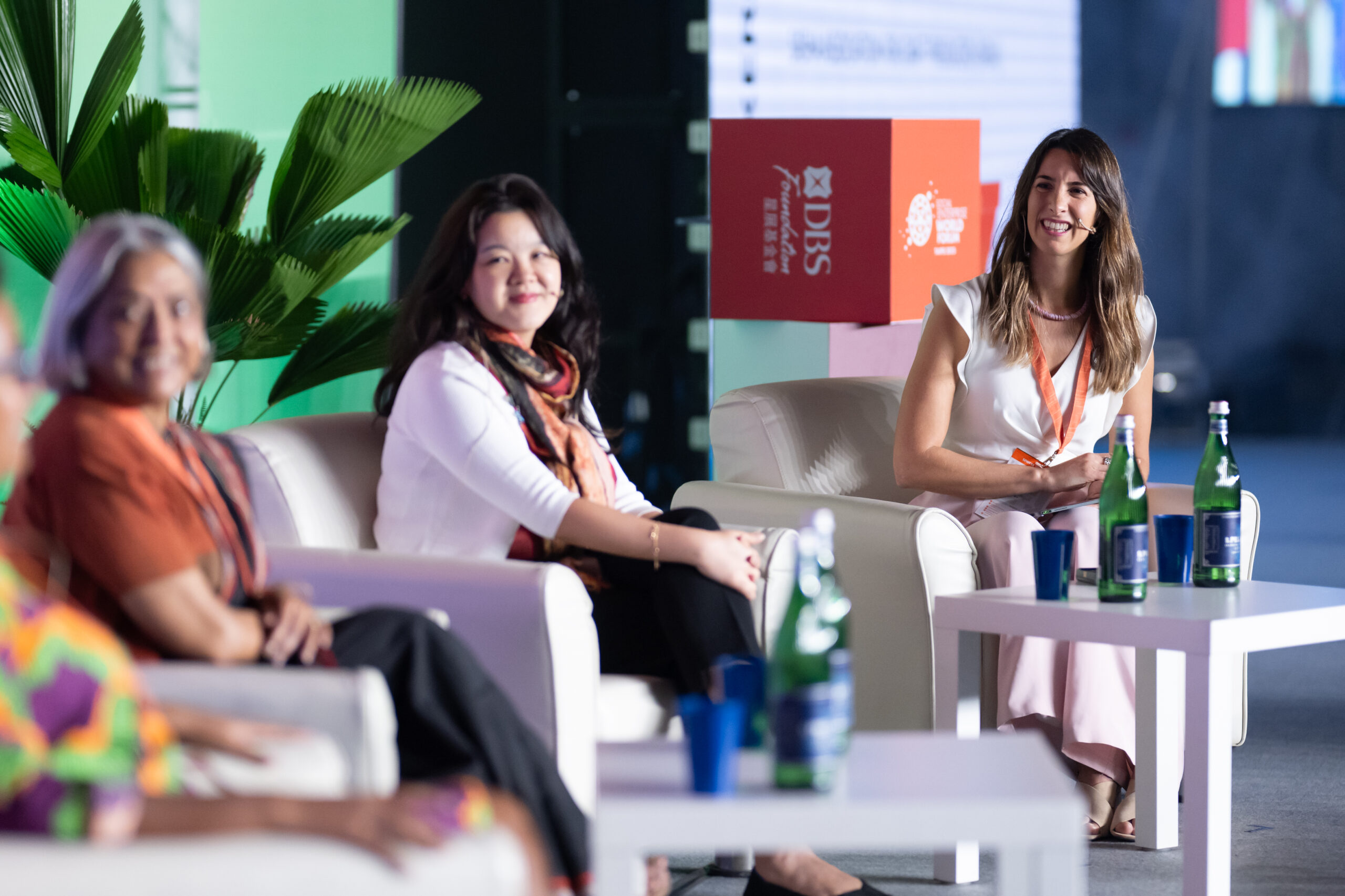
Jessica Oyarbide is Co-founder of EKHOS, an ecosystem builder that works to create, drive and connect impact ecosystems across Latin America, India and Europe. She is based in Argentina, a country where the social enterprise movement is growing but still finding its footing on the world stage. Her journey with SEWF, from first-time participant to Board member, shows what sustained engagement with this community can achieve, both personally and organisationally. New partnerships, expanded reach across Latin America and a platform to ensure that voices from underrepresented regions are part of the global conversation.
When Jessica first encountered SEWF, she was working at the edges of a small but growing ecosystem in Argentina, looking for a way into the global conversation. She found it. Below, she describes what that journey looked like in practice and what it has meant for her, her organisation and her region.
A dream, ten years in the making
I’ve known about SEWF for at least ten years, since the early days of my career. Back then, I was just getting started in Argentina’s social enterprise sector and the moment I understood what SEWF was, it went straight onto my bucket list.
Where I come from, the social enterprise movement is still relatively small. There’s no specific legislation for social enterprises and other countries in the region, Colombia, Peru, Uruguay, are further ahead in formalising the sector. The worker-recovered enterprise movement, one of the country’s most distinctive contributions to the sector, never fully consolidated into a unified force. The potential is real. Argentina accounts for around 14% of impact investment across Latin America, but it hasn’t always translated into momentum on the ground. I wanted to understand how things were developing in other countries, connect with people working on the same challenges and find the key figures in the field that I hadn’t yet had a way to reach. For a long time, SEWF felt like the place where all of that might be possible. I just needed to get there.
Amsterdam, finally
The opportunity came in 2023 to attend SEWF23. I was going to be in England around that time and Amsterdam felt closer than it ever would from Buenos Aires. I covered the costs myself. It was a significant decision on a personal level too. My son was one year and seven months old and it was the first time I had really been away since he was born.
I arrived an hour early, a time zone mix-up that meant I walked to the venue while it was still dark. I saw the space being set up, the branding, the scale of it. I teared up when I got my lanyard. After ten years, I was finally there.
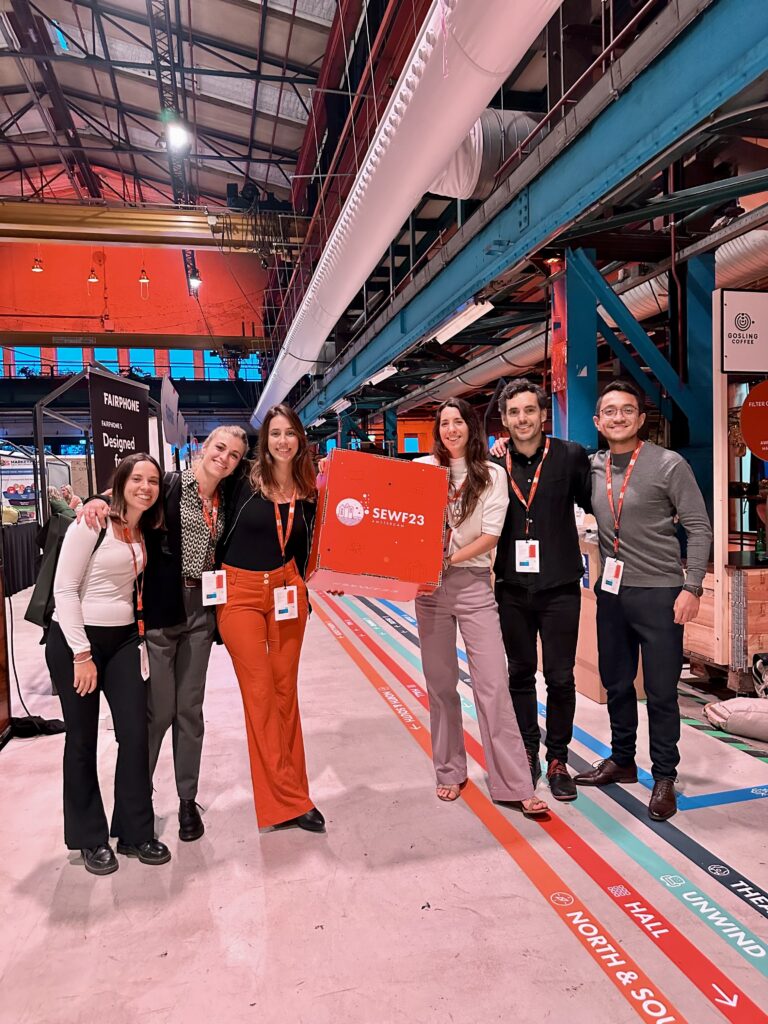 I made the most of every moment, attending sessions, joining workshops, connecting with people from all over the world. One thing I was determined to do was find the other Latin Americans in the room. We organised ourselves, met up, exchanged thoughts and took a photograph together. It felt important to show that Latin America was present at the world’s most significant social enterprise event.
The moment that stayed with me most was when People and Planet First was launched on the main stage. The video played, I had goosebumps. I remember thinking: this is the way forward. I knew immediately it was going to be a match.
I also left with connections that turned into something real. Through SEWF I connected with Social Enterprise UK, which led to an invitation to an event in Plymouth, my first direct encounter with that ecosystem and the beginning of an ongoing collaboration with Plymouth Social Enterprise Network. I met Bryan, an Ecuadorian researcher working with Indigenous social enterprises, who later collaborated with us on our learning programmes. A connection with WFTO led to an invitation to facilitate sessions for their certified enterprises. And I reconnected with someone I had once interviewed in her office in Calcutta. We ended up on the same panel at SEWF25 in Taiwan.
SEWF23 exceeded every expectation. What struck me most wasn’t the scale or the programme. It was the people. Authentic, values-driven, not interested in showing off. Just genuinely committed to making the world better. That’s not so easy to find.
Finding my people, globally
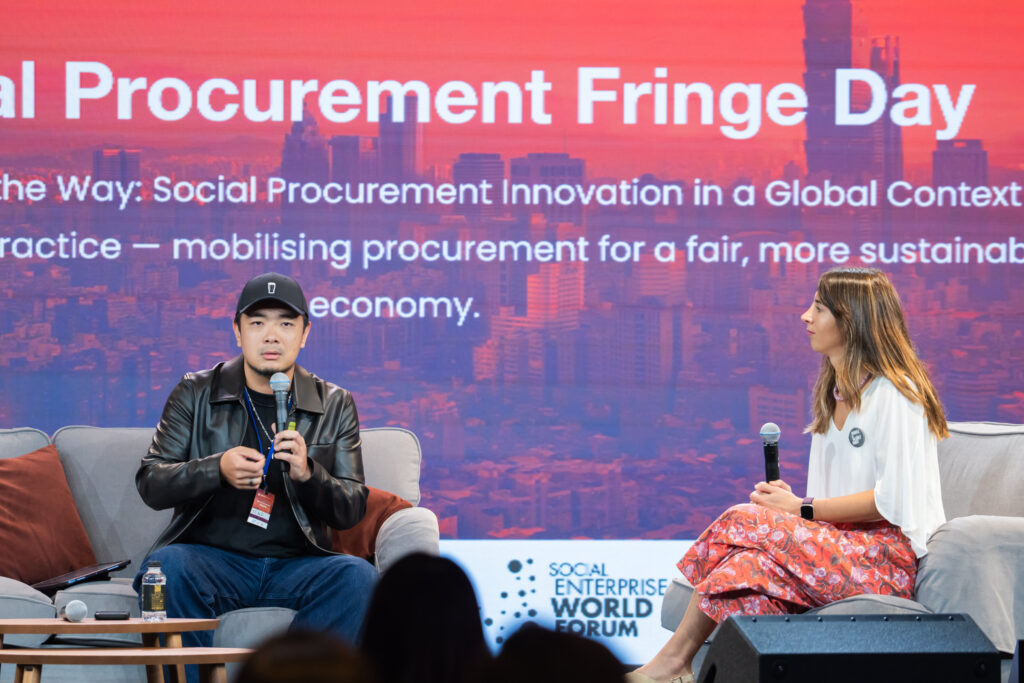
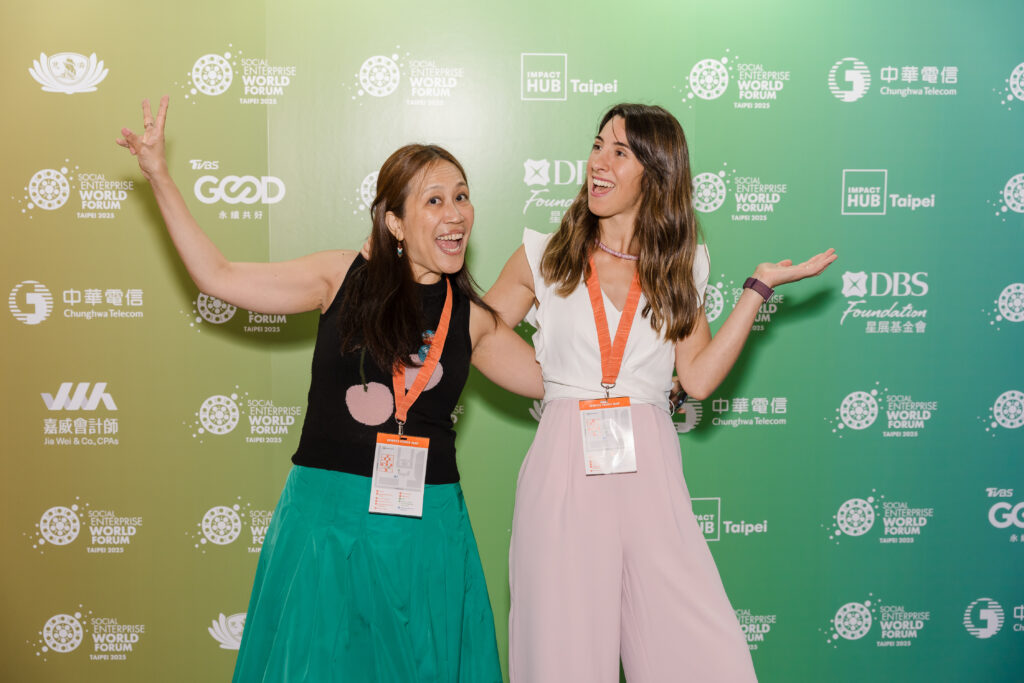 Through EKHOS’s engagement with SEWF, connections that would have taken years to build started happening naturally. At SEWF23 I was a participant, soaking it all in. By SEWF25 in Taiwan, I was back as a speaker and facilitator, co-hosting the Social Procurement Fringe Day, speaking on the main stage and co-delivering a workshop on storydoing with Irma del Mundo from brandkind in Australia. That kind of collaboration, between two social entrepreneurs from opposite sides of the world, with different origin stories but a shared impact journey, wouldn’t have happened any other way. A social procurement event during our Impact Journey trip to India, organised in collaboration with the Indian Social Procurement Coalition and SEWF, came together in part because of a connection made in Taiwan. Meeting the SAP India team leader in person transformed what had been a working relationship into a trusted one. That kind of trust is hard to build remotely. SEWF creates the conditions for it.
SEWF also brought us into the Aligned for Impact Coalition for harmonising data for social enterprises. Back in 2019, we had launched one of the first social enterprise mappings in Argentina, a collaborative effort with colleagues and two universities to build consensus around definitions, questions and methodology. When we were invited to join the Coalition, we found a group of prominent professionals doing exactly the same work at a global level. Together we produced a concrete output: a playbook. That gave us the foundation to launch a new mapping initiative with three Argentinian universities, using the Coalition’s core questions, translated and adapted into Spanish. The goal is a LATAM Social Enterprise Status Report, mapping the ecosystem country by country across the region. Amanda Kiessel, Co-founder of Good Market, whom we met through the Coalition, has been a key partner in that work.
Beyond individual connections, SEWF brought us into People and Planet First, a global verification and collective network stewarded by SEWF alongside Good Market and Purchasing with Purpose. For EKHOS, joining meant something concrete. We are now an official People and Planet First partner and the work doesn’t stop there. I lead communications for People and Planet First across Latin America, run workshops to introduce the verification to organisations in the region and actively work to connect as many of them as possible to the global network. We introduced People and Planet First in Mexico at an event with Red Impacto Latam, opening conversations that wouldn’t have been possible otherwise.
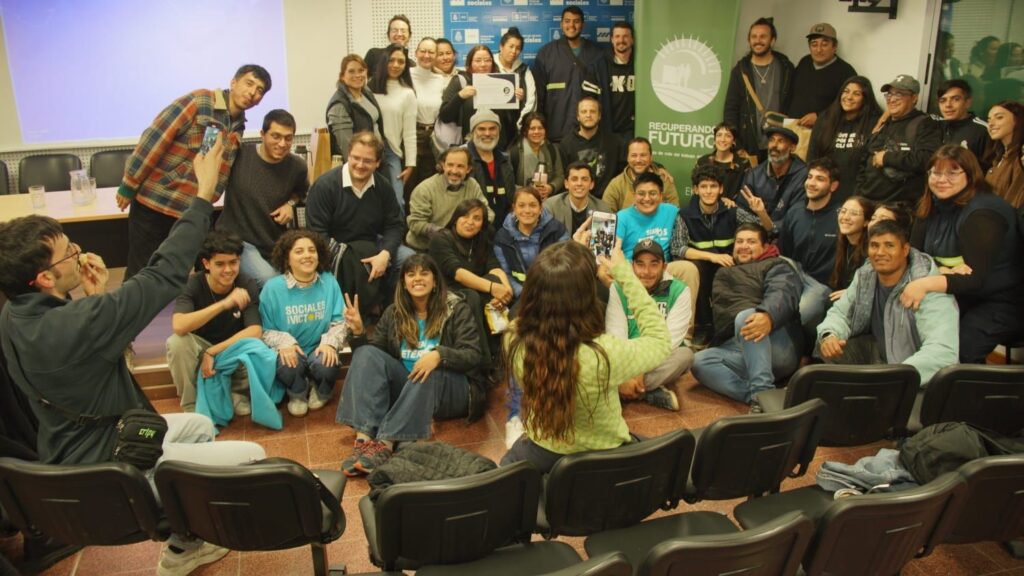 And in Córdoba, five recycling cooperatives went through the verification process, organisations from sectors that had been excluded for decades. For them, the verification was a milestone. It changed how they spoke about themselves and opened new conversations with the private sector. They held events in each of the five localities where they work. Seeing how much a verification can mean to an organisation that has long been overlooked, that stays with you.
We are no longer a standalone voice. We are helping to build the visibility of the ecosystem.
Confidence and a seat at the table
I knew that engaging with the SEWF community would be useful for building connections. What I didn’t anticipate was how much it would affect me on a personal level.
For years, I had been backing projects and making decisions that people around me sometimes questioned, ideas they thought were too ambitious, too difficult, or simply not worth pursuing. What I found at SEWF was that many of those same decisions closely mirrored the paths that social enterprise leaders in other countries had taken to build strong ecosystems. Seeing that didn’t just feel good. It was genuinely clarifying.
It also gave me new friends, a stronger professional network and, I’ll be honest, a confidence I hadn’t quite had before.
In some ways, the relationship had started even before Amsterdam. I had already been uploading EKHOS’s research and papers to SEWF’s Resource Library and recommending the forum to colleagues across Latin America. But SEWF23 was the moment it became personal. From there, things deepened gradually. Becoming a People and Planet First partner, completing and circulating the Rural Social Enterprise Manifesto survey, joining virtual meetings, getting to know the SEWF team. From there, things deepened gradually. In 2024, EKHOS facilitated the first People and Planet First panel in Spanish during Social Enterprise Day, alongside Red Impacto Latam and Procuyo, one of the first People and Planet First verified social enterprises. During People and Planet First Week that same year, we organised an event in Tandil, Argentina, bringing the global verification into a local context. Little by little, we realised how aligned we were, in vision, in values, in the way we work.That alignment led somewhere I hadn’t anticipated. On a visit to Scotland, I reached out to SEWF’s Founder and Managing Director, Gerry Higgins. I had followed his thinking on ecosystem development for years and wanted to meet him in person. He helped organise a meeting with Social Enterprise Scotland, hosted me at his home and over a few days we talked at length: about ecosystem development, EKHOS’s work connecting India and Latin America, our personal journeys, our shared vision for People and Planet First. I remember thinking: how can someone with such an impressive trajectory be so humble and warm? This is exactly the kind of leadership we need in this ecosystem.
It was in that conversation that Gerry mentioned there was a Board position available for someone from Latin America. I was and still am, incredibly grateful for that opportunity. After that informal conversation, we formalised the process: not only to join the Board, but to become an associate partner working together on the expansion of People and Planet First across Latin America.
And then there’s the thing I still find hard to say without it sounding unlikely: I am now on the Board of an organisation I spent years admiring from a distance. SEWF is committed to representation from every continent and when the invitation came, it felt like the culmination of everything that engagement had been building towards.
Staying connected, staying committed
Being on the SEWF Board hasn’t changed the reason I stay connected to SEWF. It has just deepened it. I joined the board in October 2025, so I am still finding my feet, but the role means engaging with reports, contributing to decisions, offering contacts and perspectives and learning to co-create with people from different countries, backgrounds and sectors. People whose approaches may differ, but who share a common conviction about the power of social enterprises.
In 2025, SEWF joined as global partner for EKHOS’s Global Impact Businesses and Ecosystem Forum, facilitating a workshop on People and Planet First with key Indian partners and speaking on a panel about networks. The relationship, in other words, goes both ways.
I continue to work on expanding the People and Planet First network across Ibero-America and India and lend my regional expertise to projects and consultations where a Latin American perspective adds value.
The social enterprise sector faces real challenges, in Argentina, across Latin America and globally. Staying connected to SEWF is one of the most effective ways I know to keep strengthening the network, adding new nodes and making sure the work doesn’t happen in isolation.
“When I look at the media and at some of the global situations that could easily diminish our spark of hope, I think back to SEWF and my eyes fill with tears. There are people bringing together communities that have struggled for centuries to build social enterprises where peace, love and empathy are at the core. There are corporations transforming conservative systems to create real inclusion. There are policymakers who refuse to believe in the impossible. There are people who hold on to hope and to the certainty that together, we are stronger.
Why connect with the SEWF community? Because we are not alone. We are many, spread across the world, not only hoping for a better world, but actively creating the ecosystem where that better world is already emerging and growing stronger.
If this resonates with you, then you should definitely join us.”
_
Jessica’s story is one of many. Whether you’re looking to expand your network, grow your organisation’s reach, or simply connect with people who share your vision, there are many ways to get involved with SEWF and the wider community.
Also read:
 SEWF Verification: Two key supply stakeholders
  Working together for tomorrow: Highlights from People and Planet First Week 2024
  SEWF Verification: What’s in it for social enterprises?
  Why has SEWF launched a verification pilot programme?
  SEWF Social Enterprise Day: Collective action for people and planet